The Development Environment: Why Unreal Engine 5
Every immersive world needs a development engine – the software that handles the construction, rendering, lighting, physics, and real-time performance of the environment. At Anydream, we build in Unreal Engine 5, developed by Epic Games and widely considered the most advanced real-time 3D creation platform available.
The choice of Unreal Engine 5 is not incidental. It is central to what Anydream worlds are able to be.
What Unreal Engine 5 Actually Does
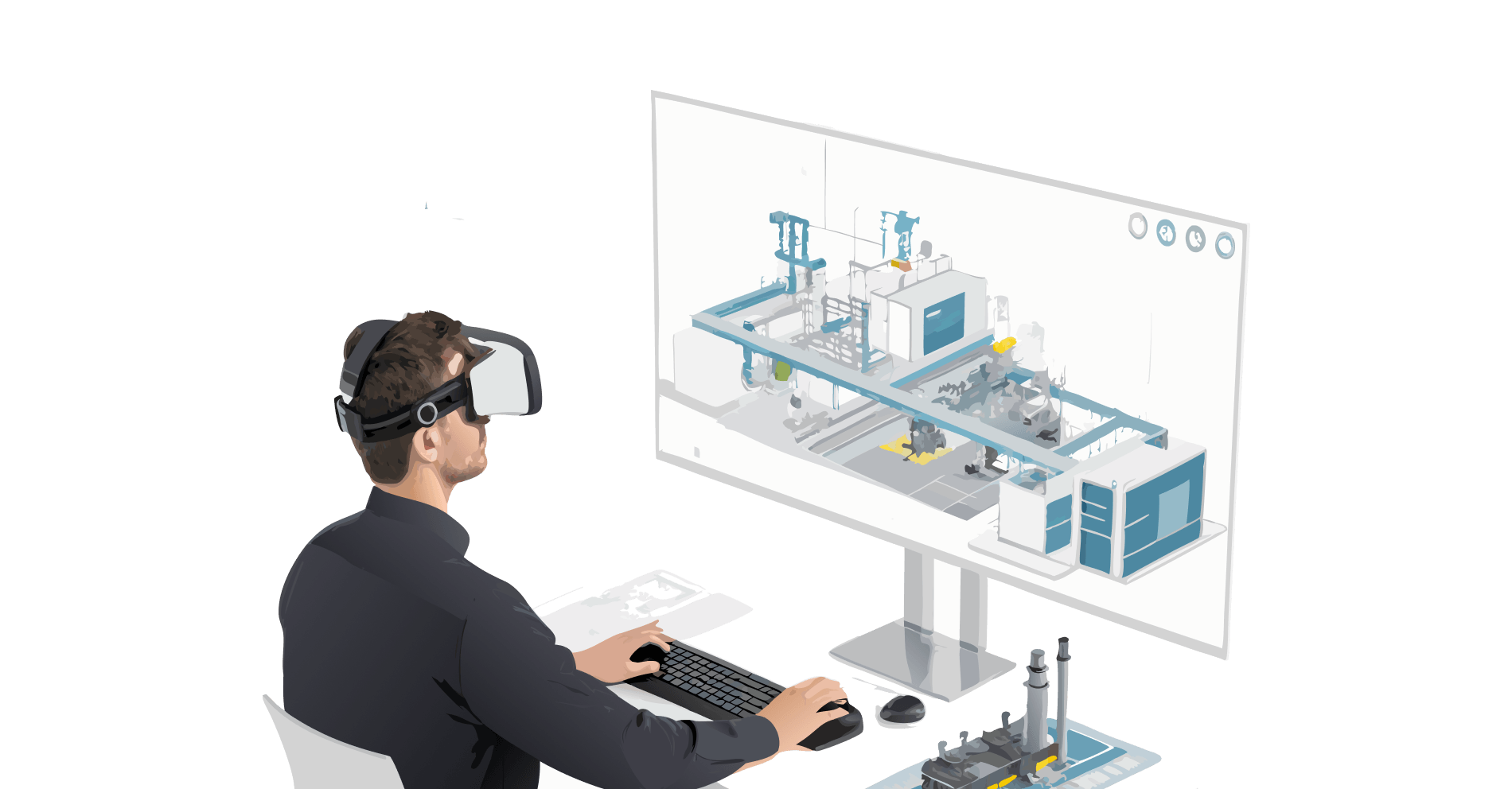
Unreal Engine 5 is a complete real-time 3D creation platform used across the games industry, film and television visual effects, architecture visualization, and immersive experiences. For Anydream's purposes, three specific technical systems within Unreal Engine 5 define what our worlds can achieve:
Nanite – Virtualized Geometry
Nanite is Unreal Engine 5's virtualized micropolygon geometry system. In plain terms: it allows environments to render at a level of geometric detail that was previously impossible in real time. A stone wall in an Anydream world contains millions of individual polygons – the same level of detail you would find in a film visual effects asset, not a game asset. Nanite handles the processing load by rendering only the geometry that is actually visible on screen at any given moment, at exactly the level of detail the camera requires.
The practical result is that a stone archway in Dune Desert's bazaar looks like stone. Not like a texture applied to a flat surface. Like actual carved stone with physical depth, irregularity, and the specific geometry of something that has been worn by centuries of hands and weather.
Lumen – Fully Dynamic Global Illumination
Lumen is Unreal Engine 5's real-time global illumination and reflections system. Global illumination refers to the way light bounces – how light that enters a doorway doesn't just illuminate the floor directly in front of the door but gradually fills the room, how the interior of a clay pot reflects slightly differently than the exterior, how the color of the sky at sunset affects every surface it touches.
Before systems like Lumen, global illumination in real-time environments had to be pre-calculated and baked – meaning it was fixed in place and couldn't change dynamically. Lumen calculates it in real time, which means that as the light in Dune Desert shifts from the blue of pre-dawn to the orange of late afternoon to the silver of a clear night, every surface in the world responds correctly. The shadows deepen in the right corners. The warm tones of sunset catch the right edges of the stone. The interior of the coffee house dims in a way that feels accurate, not approximated.
World Partition – Large-Scale Environment Management
World Partition is Unreal Engine 5's system for managing environments of significant scale – loading and streaming only the portions of a world that are currently needed, without visible loading or interruption. For Anydream, where worlds span from enclosed interior spaces to open desert landscapes, this system is what allows the transition from the bazaar to the desert to feel continuous rather than segmented.
Why Real-Time Rendering Matters for Anydream
It is worth pausing on what "real-time" means in this context – because it is central to what distinguishes an Anydream experience from a video or a photograph.
In a video, the visual experience is fixed. The same frames play in the same order every time. The light is wherever the camera placed it. The viewer's perspective is determined by the edit.
In an Anydream world, the rendering happens continuously and responsively. The light is calculated moment to moment. The environment exists in three dimensions and responds to the viewer's presence within it. This is what makes it possible to stand in the Dune Desert bazaar and look up at the cloth canopies overhead, or to turn and watch the light on the stone floor change as a cloud passes in front of the sun. These are not pre-recorded moments. They are live calculations.
Real-time rendering at film-quality visual fidelity, which is what Nanite and Lumen together make possible – is what allows Anydream worlds to be both cinematically beautiful and genuinely immersive. You are not watching a beautiful place. You are in one.
High-Fidelity Assets: Megascans and Photogrammetry
The visual quality of an environment is determined not just by how it is rendered but by what it is rendered from. At Anydream, we use Megascans – Epic Games' library of photogrammetry-based 3D assets – as the foundation of our surface and object quality.
What Photogrammetry Is
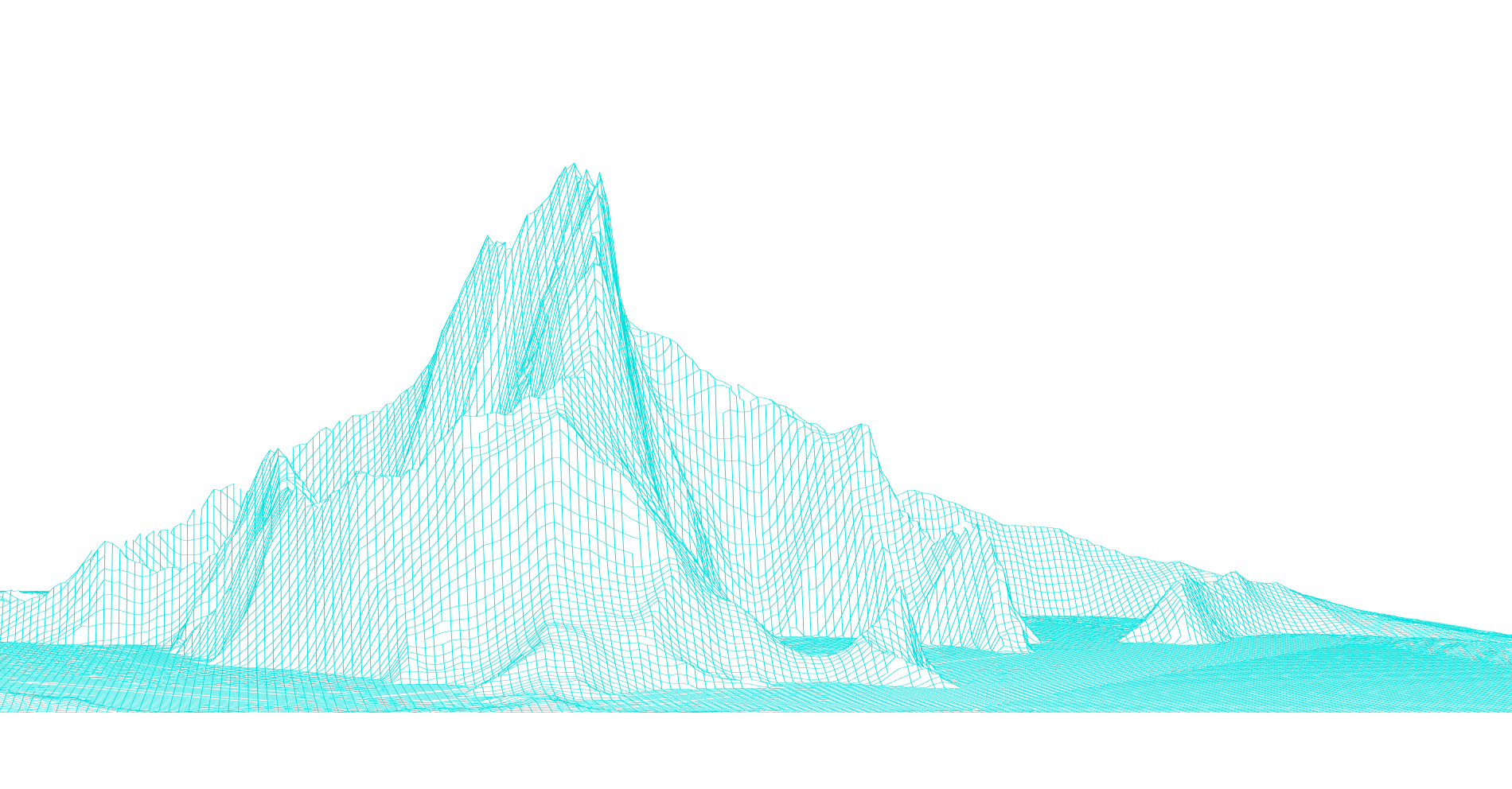
Photogrammetry is the process of capturing real-world objects and surfaces using hundreds of photographs taken from multiple angles and processing those photographs into highly accurate 3D models and texture maps. The resulting assets carry the physical and optical properties of the real objects they were scanned from – the irregularity, the wear patterns, the micro-surface detail that makes a material look genuinely real rather than digitally generated.
Megascans is the world's largest library of photogrammetry assets, covering:
- Surfaces – stone, sand, soil, wood, fabric, plaster, concrete, metal, ceramic, and hundreds of other materials, each captured at centimeter-level detail from real-world sources around the globe
- 3D objects – rocks, boulders, branches, debris, architectural fragments, vegetation, and organic forms
- Atlases – tileable texture maps for large-scale surfaces like desert sand, cobblestone, and earthen walls
- Decals – details like cracks, stains, moss, and weathering marks applied to surfaces to add age and specificity
For Dune Desert, the Megascans assets used in production included sand and soil surfaces captured in the Sahara and Arabian Peninsula, stone and sandstone materials sourced from ancient Near Eastern excavation sites, ceramic and fired-clay textures aligned with the pottery traditions of the region, and wooden textures from reclaimed timber appropriate to the period and geography.
The Role of Custom Asset Creation
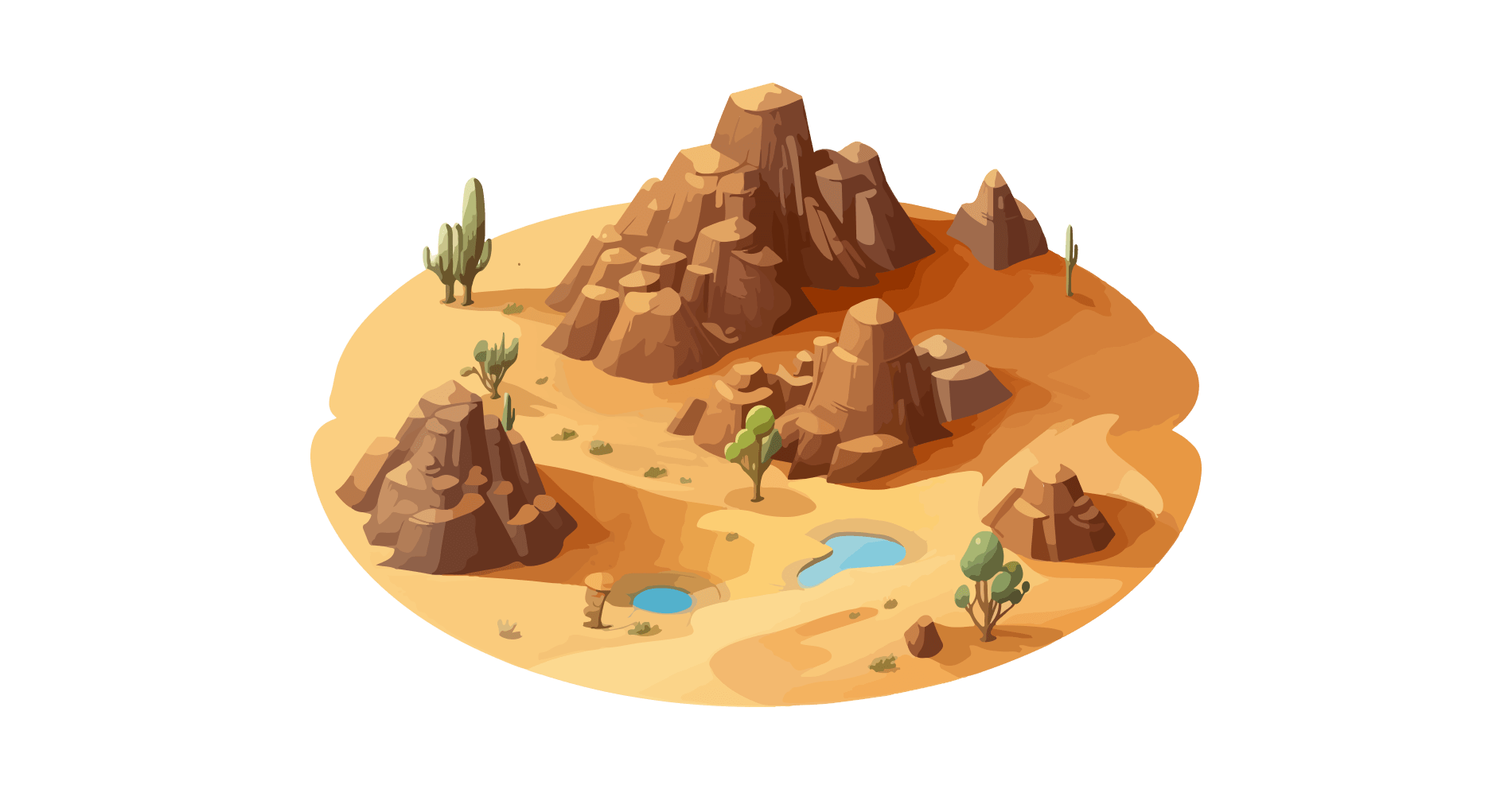
Not everything in an Anydream world comes from Megascans. Culturally specific objects – the specific shape of a pottery vessel, the pattern on a woven rug, the carved detail of a gate or a market stall – require custom 3D modeling, because the photogrammetry library cannot cover every object in every cultural tradition.
Custom assets in Dune Desert were built by the 3D modeling team using a combination of ZBrush (for high-detail sculpting), Maya (for clean mesh production), and Substance Painter (for material and texture creation). The workflow follows an industry-standard pipeline:
- High-poly sculpt – the object is sculpted in ZBrush at maximum detail, as if it were a physical object
- Low-poly retopology – a lighter mesh version is created that can be processed in real time
- Normal map baking – the high-poly detail is baked into a normal map applied to the low-poly mesh, preserving visual complexity without the processing cost
- Material creation – surfaces are textured in Substance Painter with physically based rendering (PBR) materials that respond correctly to any lighting condition
A single complex custom asset – a detailed pottery vessel, a carved wooden door panel, an ornamental lamp – takes between three and eight days to bring from reference to a production-ready Unreal Engine asset.
Assembling the World: From Empty Scene to Inhabited Space
With assets prepared, the actual construction of the world begins. In Unreal Engine 5, this process moves through several distinct phases.
Phase 1: Blockout
The first phase is the blockout – a rough three-dimensional approximation of the environment using simple geometric shapes. No textures. No detail. Just the spatial relationships: where the walls are, how wide the streets are, where the sky is visible, what the proportions of the gate feel like when you are standing at its base.
The blockout is evaluated against the design pillars and against the approved concept sketch. Does the space feel right at this scale? Does the relationship between the narrow market street and the open sky above it produce the intended tension? Does the city gate feel massive relative to a human figure?
This phase resolves questions that cannot be answered in a sketch – because a sketch is flat, and a blockout is three-dimensional. Many spatial assumptions that look correct in concept art turn out to require adjustment when you can actually walk through them.
Phase 2: Asset Population
Once the blockout is approved, the environment is populated with assets – surfaces, structures, objects, vegetation, and atmospheric elements.
This phase is enormously iterative. The placement of assets in an environment is not a matter of distributing objects according to a plan. It is a matter of reading how the space feels as it fills, and making continuous adjustments: this wall needs more texture break-up; this corner feels too tidy; these market stalls need to feel like they grew organically over decades, not like they were placed by a designer.
For the Dune Desert bazaar, asset population covered:
- Ground surface – cobblestone base layer, accumulated sand in the corners and crevices, worn paths where foot traffic is heaviest, occasional debris
- Walls and structures – primary stone construction, secondary mud-brick infill, weathering and staining patterns, recessed doorways, carved detail on the significant structures
- Market stalls and their contents – fabric canopies in various states of wear, wooden frames with rope lashing, stacked goods including pottery, spices, textiles, and baskets
- Ambient objects – water vessels, discarded wrapping, a kicked-over pot, a sleeping dog in a doorway, the small details that signal habitation rather than design
- Vegetation – the specific plants that grow in cracks in desert stone, potted palms outside doors, dried herb bundles hanging in stalls
- Atmospheric particles – dust motes in shafts of light, fine sand moving at ground level in air movement, the ambient haze of a hot day
Phase 3: Lighting
Lighting in Unreal Engine 5 with Lumen is both the most powerful and the most time-intensive phase of environment construction. Because Lumen calculates global illumination in real time, every light source in the environment – the sun, sky, fire, lanterns, reflected light from surfaces – interacts with every other element in the space.
For Dune Desert, lighting was developed across three primary conditions:
- Dawn – the specific quality of light just before and just after sunrise in a desert environment: the blue that precedes colour, the rapid transition as the sun clears the horizon, the long horizontal shadows
- Midday – the challenge here is not drama but accuracy: midday desert light is harsh, almost colourless, and produces a flatness that the eye reads as heat. Getting this right required extensive reference work and multiple iterations
- Night – the primary light sources shift entirely to the moon and lanterns. The challenge is preserving spatial legibility while achieving genuine darkness. Too light and the night feels theatrical; too dark and the space becomes illegible
Each lighting condition required approximately one week of dedicated work from the lighting artist, plus review and iteration with the full team.
Phase 4: Performance Optimisation
A world that looks extraordinary but runs poorly is not a usable experience. The final phase of environment construction is optimisation – the process of ensuring that all of the visual quality achieved in the previous phases can be maintained at the performance levels required for a smooth, comfortable experience.
This involves:
- Level of detail (LOD) configuration – ensuring that assets simplify appropriately as they move further from the viewer's position
- Occlusion culling – confirming that objects hidden behind walls are not being processed unnecessarily
- Texture streaming – managing how high-resolution textures load and unload as the viewer moves through the space
- Draw call analysis – identifying and resolving cases where the environment is making excessive demands on the rendering pipeline
- Frame rate profiling – running the environment across target hardware configurations and resolving any performance shortfalls
Optimisation is unglamorous work. It is also non-negotiable. The experience of presence in an immersive environment depends critically on consistent, smooth visual performance. Frame drops or stuttering break the sense of inhabiting the space far more severely than a slightly lower texture resolution would.