Building the Island: How an Idea Became a Place You Can Actually Walk Through
An idea is cheap. Anyone can say "let's do a survival story." The hard part is turning that idea into a place with a coastline, a weather system, a sound in every direction, and a reason to keep walking forward. This is the story of how we built that place – scene by scene, sound by sound.
Starting With a Map, Not a Script
Before a single line of narration was written, we drew the island as a physical space. Every immersive world falls apart the moment its geography stops making sense – if the waterfall is "deep in the jungle" in one scene and "five minutes from the beach" in the next, the listener's mental map breaks, and with it, the sense of presence we're trying to build.
So the island got a real layout, with five zones that each carry their own emotional register:
- The beach – the point of arrival. Open, exposed, sun-bleached. Where the shipwreck debris washes up, and where the hut eventually gets built.
- The jungle – dense, humid, low-visibility. The island's main source of both resources and danger: fruit groves, an ant colony, a tarantula, a scorpion.
- The cliffs and rocks – the hardest terrain, but also where the ship's wreck is lodged, and where a hidden, sheltered cove sits waiting to be found.
- The waterfall – the heart of the jungle, and the island's one guaranteed source of fresh water. Structurally, it's also the story's first real breathing room after a long stretch of tension.
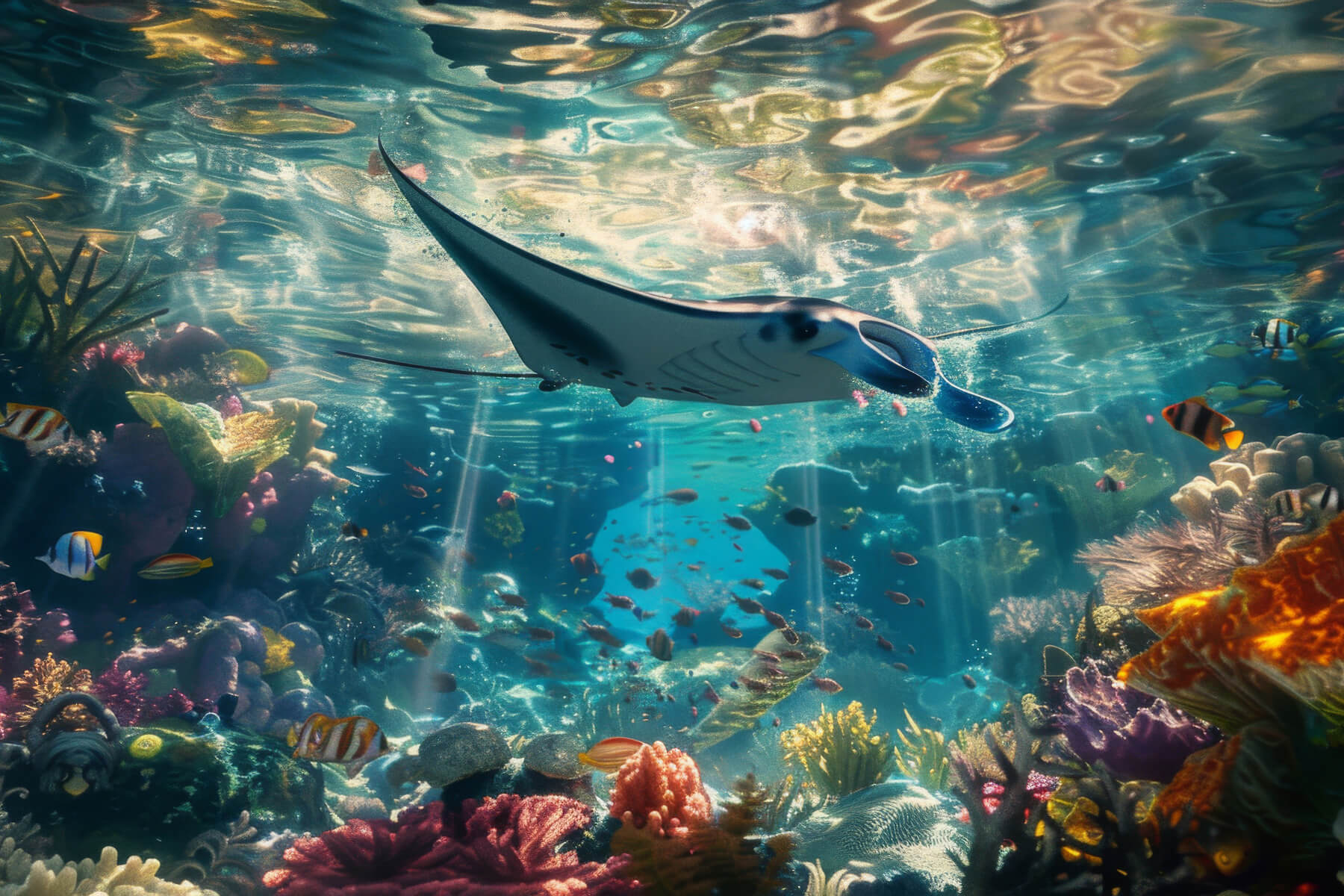
- The coral reef – offshore, underwater, and the only place in the whole world where the tone shifts from survival to something closer to wonder.
Once the map existed, the story could finally follow it – instead of the other way around. Every scene now has a specific "you are here" on that mental map, which is exactly what lets a listener close their eyes and still know which way is the sea.
Three Storylines, One Emotional Throughline
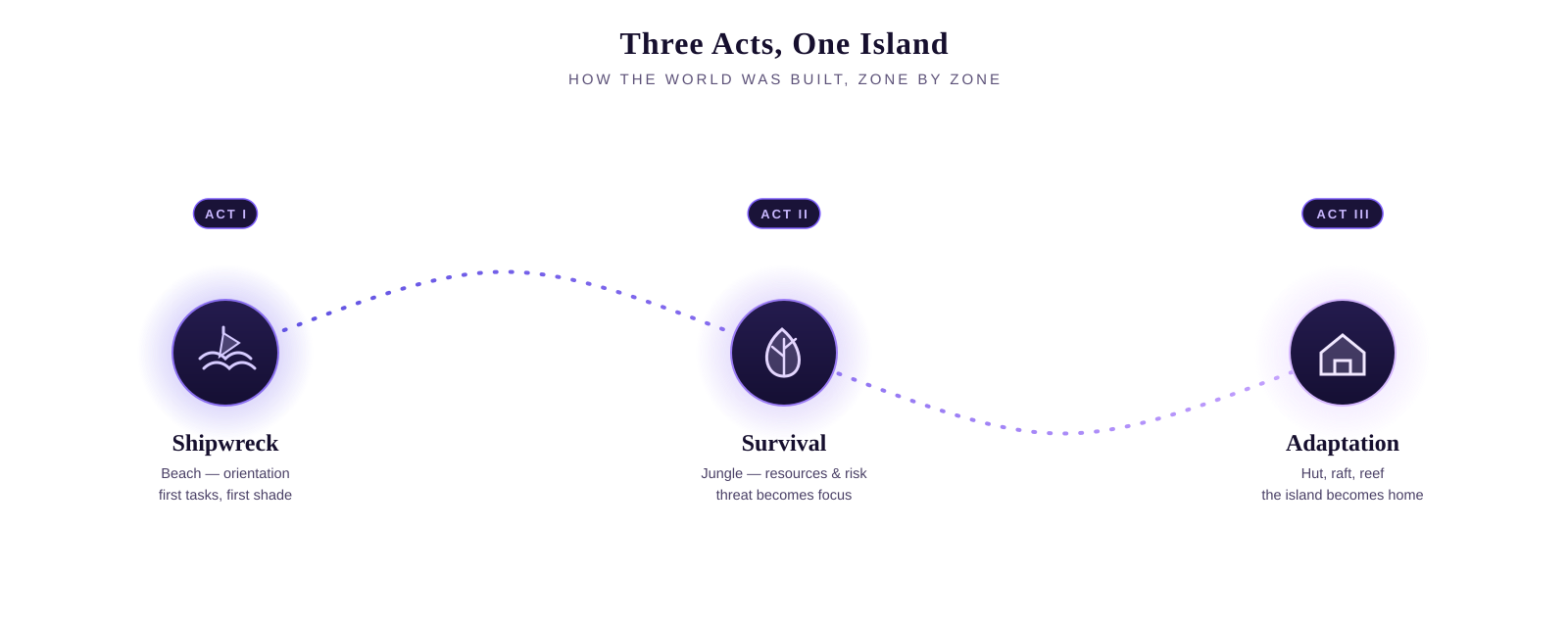
The narrative is built as three connected arcs, and each one earns its place in the sequence – none of them is filler.
1. Shipwreck
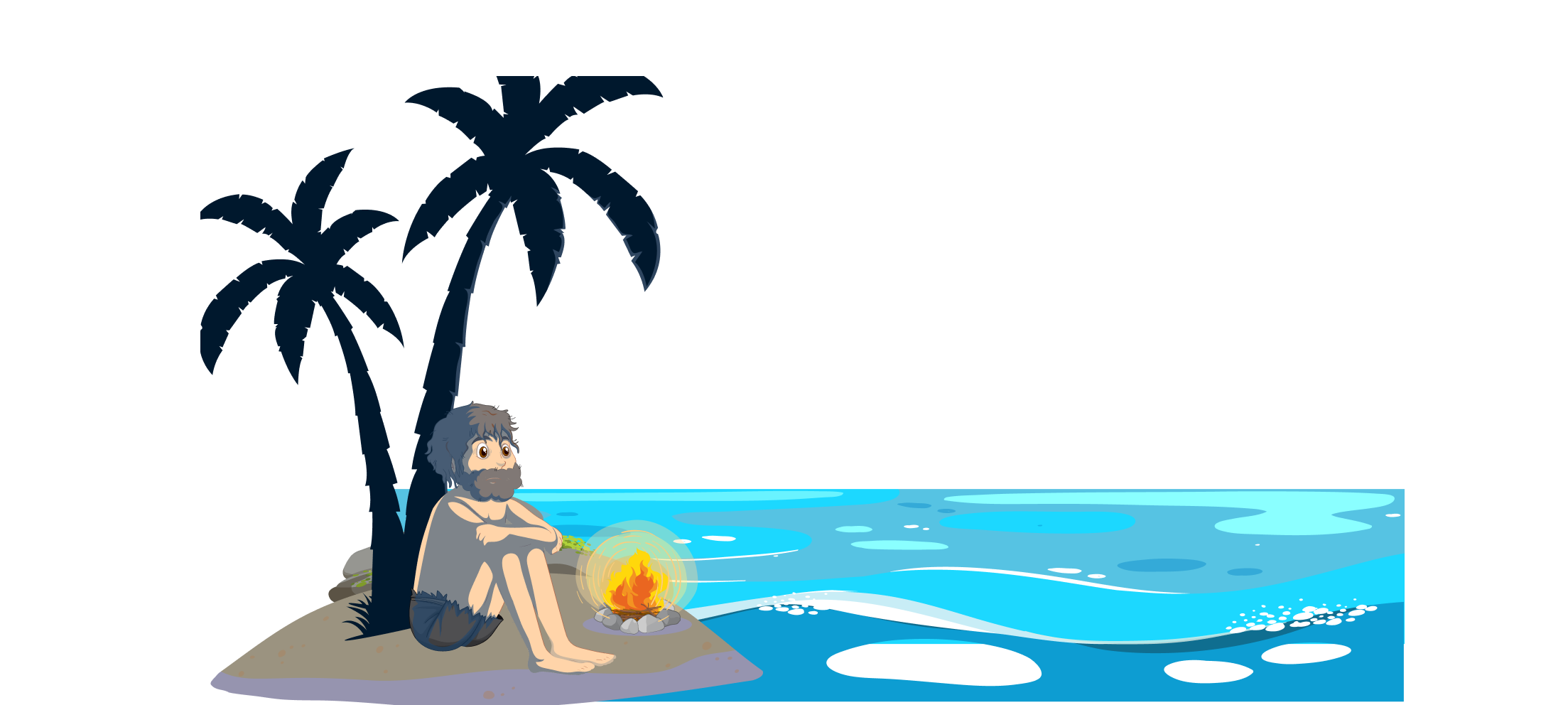
This is where the world tears itself open. A night storm at sea, a ship the protagonist can't hold steady, and then – nothing but water and dark. He wakes up on the beach with no memory of how he got there, and the first few scenes are almost entirely about orientation: finding shade, spotting the wreck on the horizon, noticing coconuts on the sand as the first tiny piece of good news. Small, concrete, physical tasks – because that's genuinely what the mind reaches for first after a shock, long before it reaches for a plan.
2. Survival
This is the jungle arc, and it's deliberately the most sensory-dense part of the world. The air changes. The light breaks into shafts instead of falling evenly. A tarantula crosses the protagonist's hand and keeps walking. A scorpion sits inches from his face and never strikes. Neither animal is a jump-scare – both are used exactly as they're used in the source material: proof that the island isn't hostile by nature, only unfamiliar. Fear here is the entry point; the exit point, a few scenes later, is a specific kind of calm that only comes from proving to yourself that you didn't panic.
3. Adaptation
By the third arc, the protagonist has a hut, a raft, and a working relationship with the island instead of a war against it. This is where the story slows down on purpose – fishing at dawn, diving for shells, watching a shark circle the raft and pass without incident, finding a coral reef "crowded with life." The tone shifts from adrenaline to something closer to quiet accomplishment. Structurally, this arc mirrors the goal of the whole experience: end the session not wound up, but settled.
Designing for Ears, Not Eyes
Because this is audio-first, every scene in the script was written with a parallel sound-design brief attached – waves, wind through palm leaves, the specific crackle of a fire catching versus a fire already burning, the muffled pressure-change of going underwater. A visual medium can cut away from a threat. Audio can't – the shark has to sound close, then sound like it's circling, then sound like it's gone, entirely through spatial audio, with nothing to look at except the inside of your own imagination. That constraint turned out to be an advantage: when there's no image doing the work for you, the brain fills in the gaps itself, and what it invents always feels more real than anything we could have shown it.
We treated three sound layers as non-negotiable in every scene: a constant environmental bed (surf, insects, wind), a foreground event (footsteps, a struck match, a struggling knot), and – critically – silence, used deliberately, the way the source text uses it: "there was no real silence in the jungle, only a deceptive lull before the storm." Removing sound at the right moment does more work than adding it.

What Almost Didn't Make the Cut
Early drafts leaned harder into external danger – more predators, more near-misses, more plot. We cut most of it. The strongest material in the source text was never the threat itself; it was the protagonist's interior monologue right after the threat passed. So the final version trades incident for aftermath: fewer close calls, more time spent letting the listener actually feel the relief that follows one.
The Island, By the Numbers
A few concrete design decisions that shaped how believable the geography needed to feel:
- Five zones, one continuous walk. Every location connects to its neighbors by a route a listener could plausibly trace on foot in a single day – no teleporting between beach and reef. Continuity of geography turned out to matter more to immersion than any single sound effect.
- One water source, deliberately. The waterfall is the island's only fresh water, on purpose. Scarcity of a single resource does more narrative work than any number of generic dangers – it gives every water-adjacent scene a reason to matter.
- Danger scales with depth into the world, not with time. The beach is safest, the jungle interior is riskiest, the reef is dangerous but rewarding – proximity to the known world, not how far the story has progressed, determines tension in any given scene.
- Every animal encounter is a near-miss, never a kill. The tarantula, the scorpion, the shark all cross paths with the protagonist and then simply continue existing. We treated predation as atmosphere, not as a mechanic – the tension comes from proximity, not from combat.
Two Ways to Build a Storm – And Why We Picked the Harder One
Storm sequences in most adventure audio lean on volume: louder wind, louder thunder, more layers stacked on top of each other until the scene feels big. We tried that version first and cut it. What we kept instead relies on contrast – brief pockets of near-silence between gusts, so the ear never fully adjusts to the noise floor and each new gust registers as a fresh shock rather than more of the same. It's a harder scene to mix correctly, and it's the reason the storm still feels dangerous on a third or fourth listen, long after a purely loud version would have gone numb.
What's Next
In the final article of this series, we'll look at what actually happens to a listener during this experience – the emotional arc from panic to calm we designed for, what early listener feedback told us, and why a story about being completely alone turned out to be one of the most requested "reset" experiences on Anydream.