

We Need Mental Pauses
There is a pace to modern life that has quietly become pathological. Not because ambition is wrong or technology is evil, but because the human nervous system evolved over millions of years for a rhythm that no longer exists. A rhythm with stillness in it. With pauses. With genuine, uninterrupted rest.
Instead, we live inside a system that monetizes our attention, fragments our focus, and fills every gap with stimulation. And the numbers now tell us something is breaking.
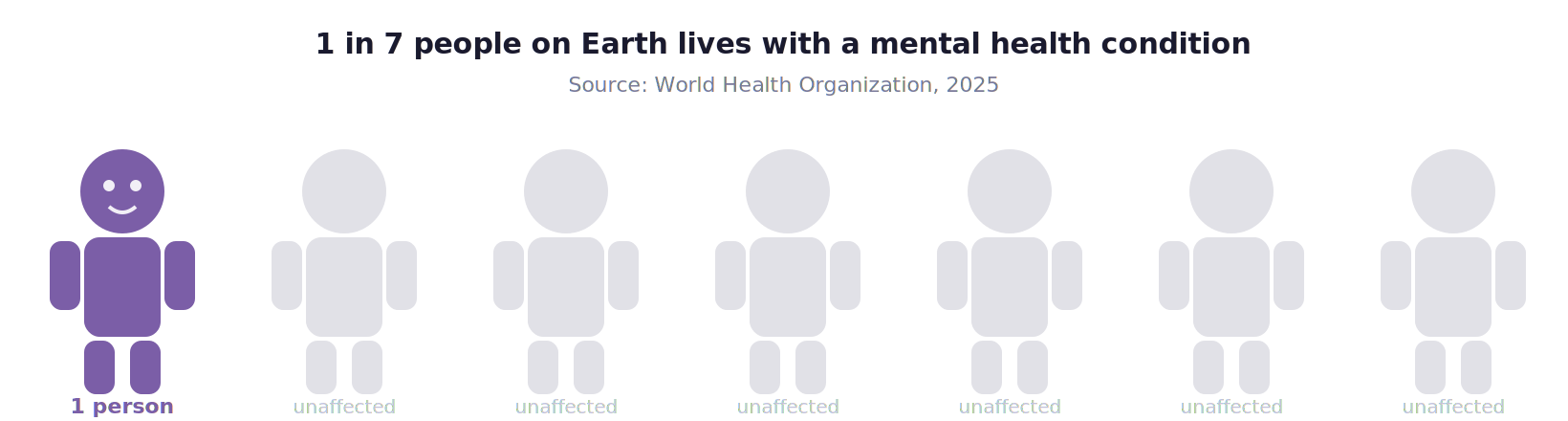
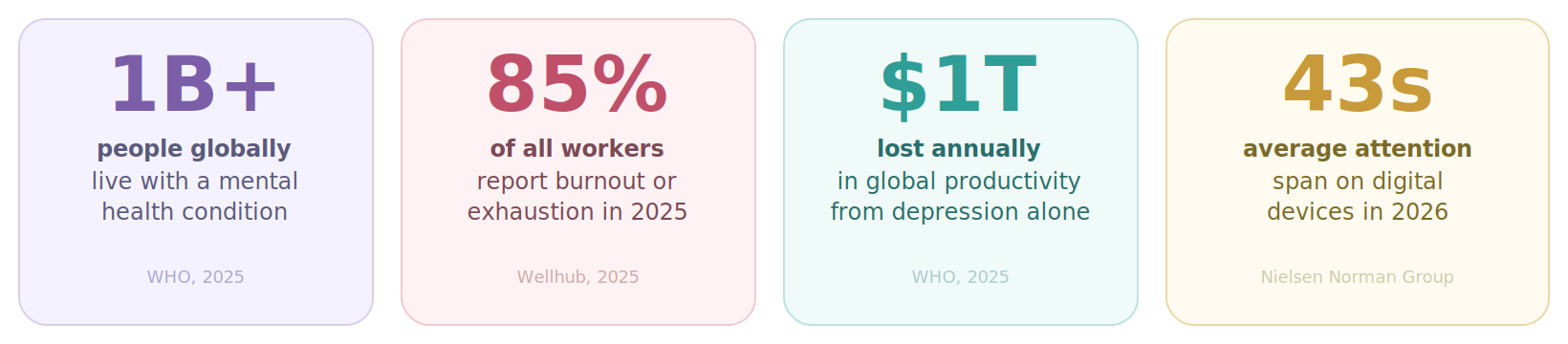
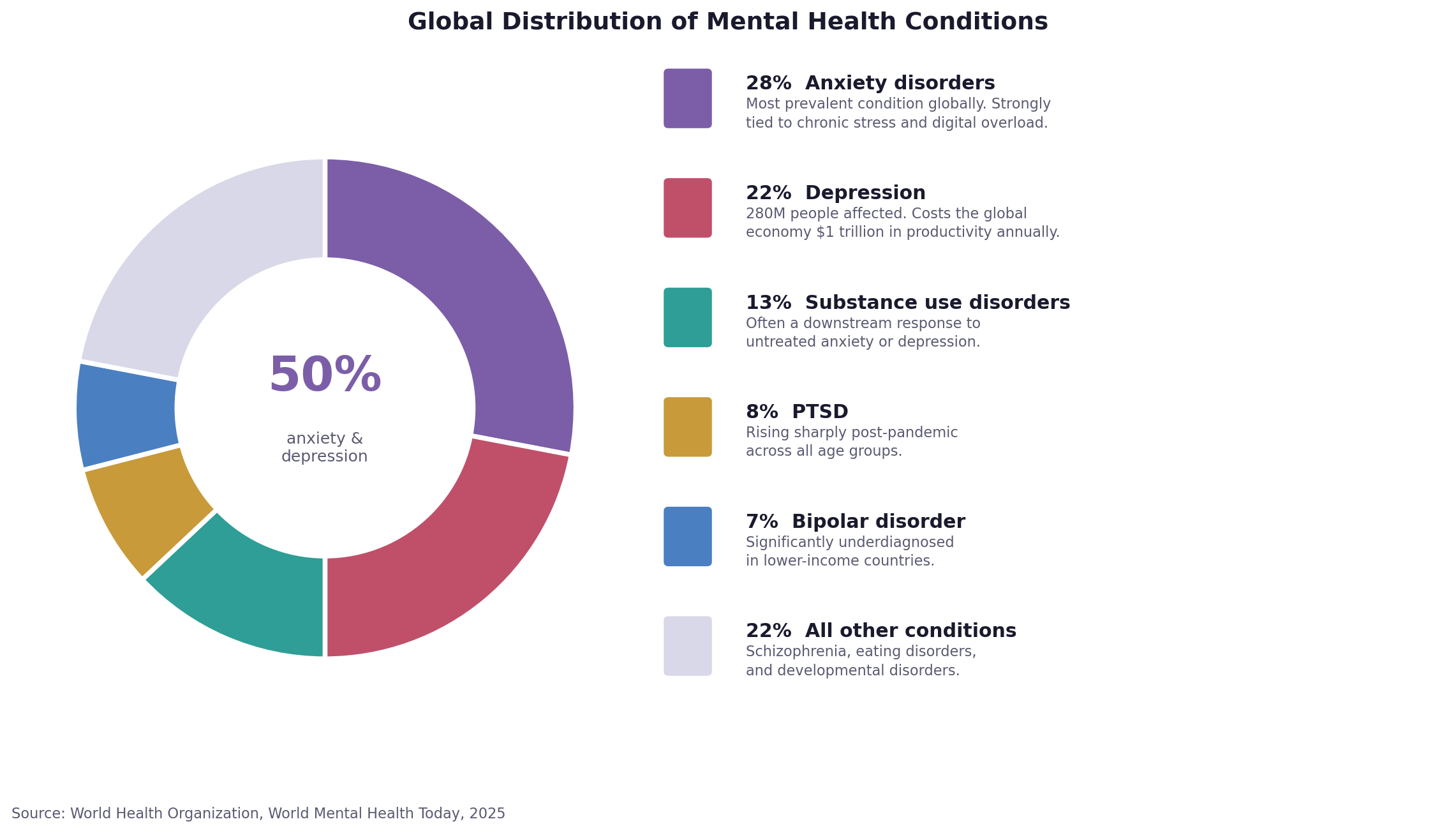
More than 1 billion people worldwide live with a mental disorder – yet most do not receive adequate care. Mental health conditions are among the leading causes of disability on the planet.
This is not a marginal problem. It is the defining public health crisis of our time. And at its core, it is a crisis of pace, pressure, and the absence of genuine mental rest.
Burnout Is No Longer the Exception
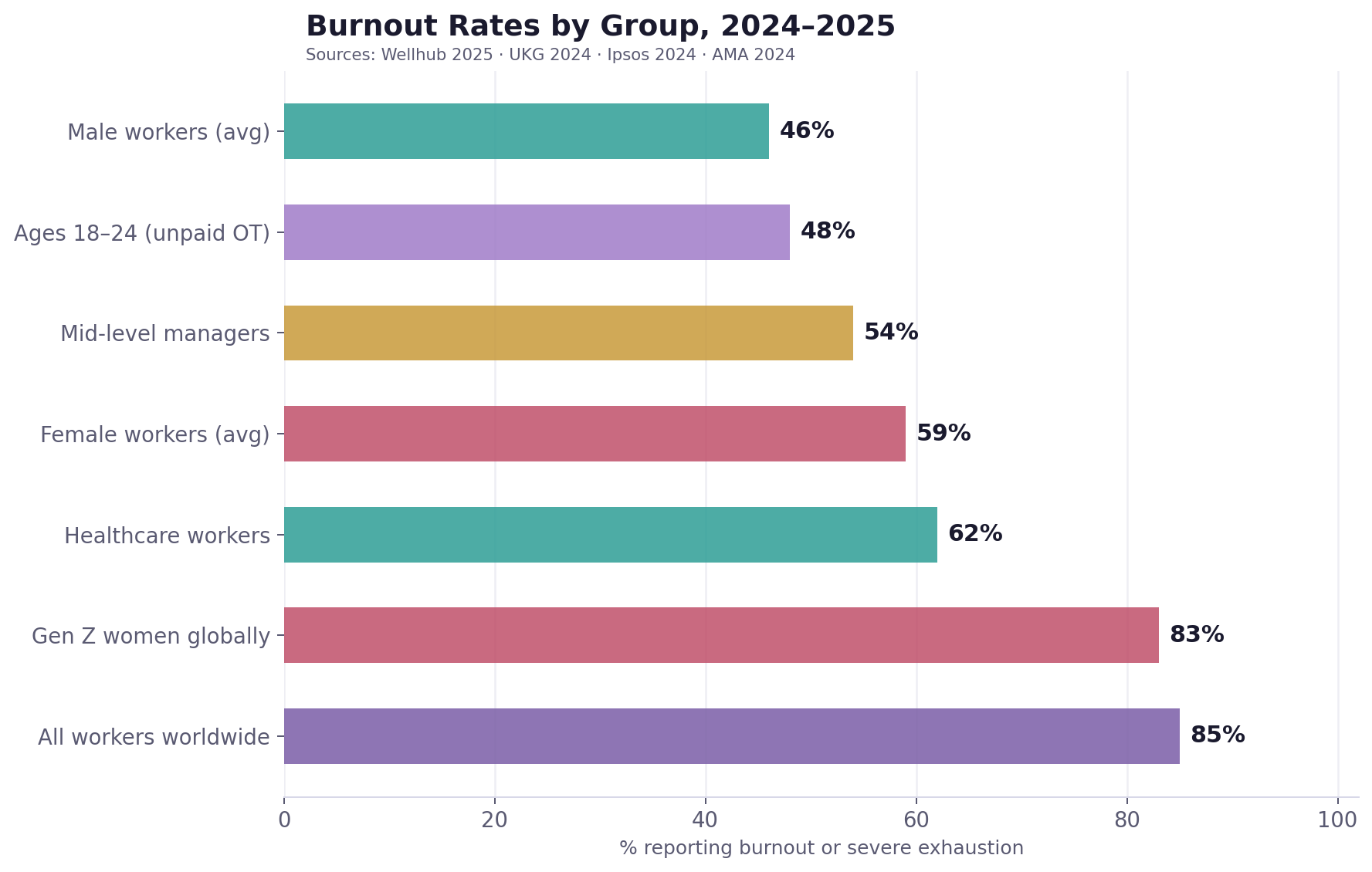
In 2025, nearly 85% of all workers reported experiencing burnout or significant exhaustion. That is not a warning signal – it is an alarm that has been ringing for years while we learned to tune it out.
The pattern is especially stark among younger generations. Gen Z workers are experiencing peak burnout at age 25 – a full 17 years earlier than the previous average of 42. The pressure is arriving sooner, compressing harder, and leaving less room to recover.
About 1 million workers are absent from work on any given day due to stress-related illness – a figure that translates into $300 billion in lost productivity annually in the US alone. (Wellhub, 2025)
The causes are structural: overwhelming workloads, financial pressure, toxic environments, and – critically – the disappearance of real downtime. When work follows us home through our phones, when notifications arrive at midnight, when the boundary between "on" and "off" has effectively dissolved, the nervous system has nowhere to land.
Women consistently report higher burnout rates across every demographic. Among Gen Z women globally, burnout is not an outlier experience – it is a shared baseline. The compounded weight of role expectations, economic precarity, and lack of structural support creates a load the body simply cannot carry indefinitely.
Digital Overstimulation
We Are Being Overstimulated – By Design
There is a second force compounding the mental health crisis, one that is newer, faster-moving, and almost entirely invisible to us as we live inside it: digital overstimulation.
The digital economy is built on a single resource – your attention. Every platform, every app, every notification is engineered to capture it and hold it as long as possible. The result is an environment fundamentally hostile to mental rest.
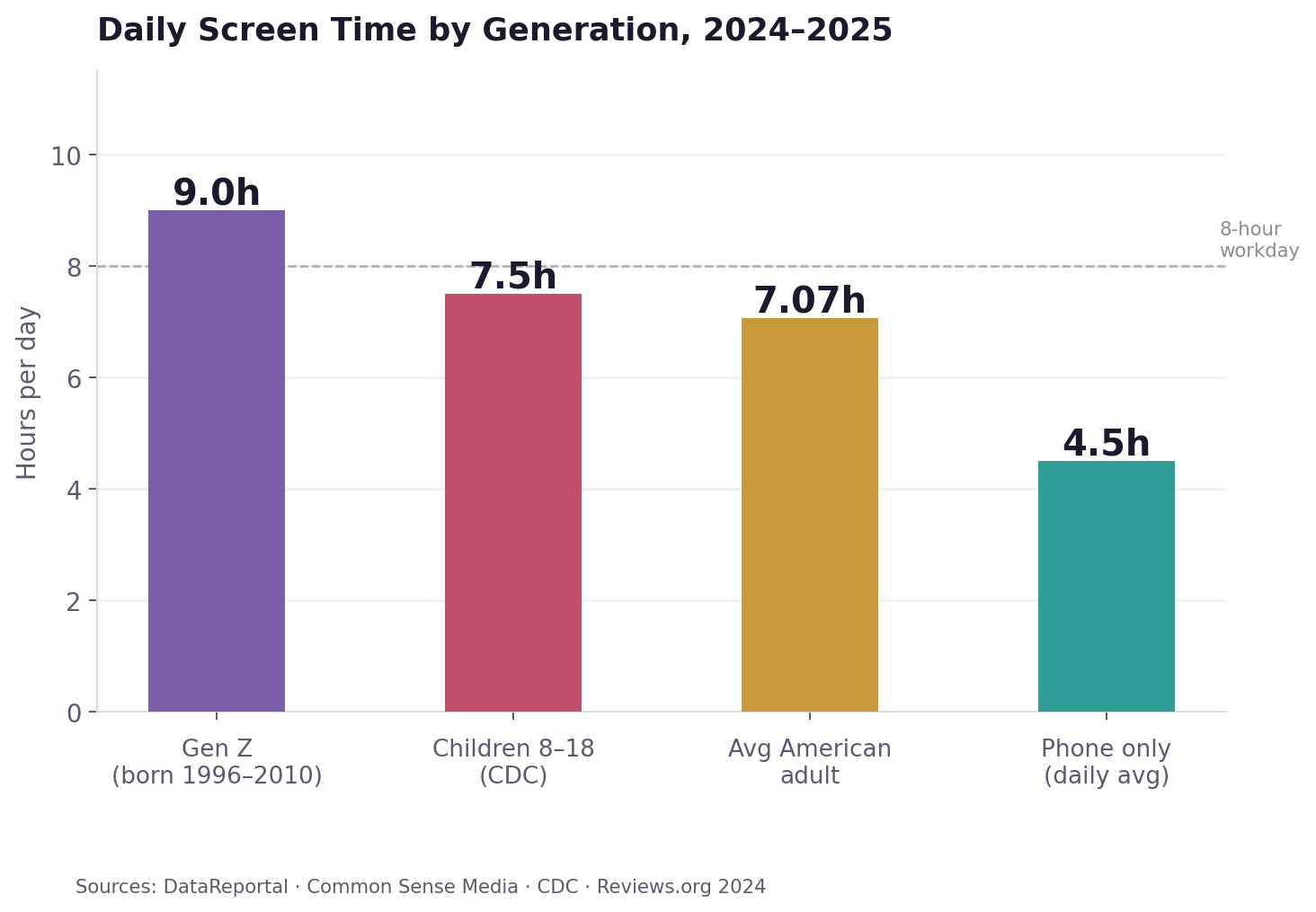
In 2024, the average American checked their phone 205 times per day – once every five minutes during waking hours. That is a 42% increase from the previous year. Americans now spend an average of 4.5 hours per day on their phones, up from 2 hours 54 minutes in 2022. Gen Z averages 9 hours of total daily screen time – more than a full working day, every single day.
These are not passive hours. Every check, every swipe, every notification represents a cognitive interruption – a micro-reset that fragments whatever internal state the mind was building. The compounding effect over months and years is profound.
Attention Is Collapsing in Real Time
The most measurable consequence of digital overstimulation is the accelerating collapse of human attention span.
In 2004, researchers at UC Irvine found that the average attention span on a digital device was 150 seconds. By 2012, it had fallen to 75 seconds. By 2024, it reached a record low of 47 seconds. By 2026, the Nielsen Norman Group confirmed it had declined further – to just 43 seconds – with users switching tasks an average of 566 times across a single 8-hour workday. Nearly one switch per minute.
A 2025 study found that 59% of employees cannot focus for even 30 minutes without a digital distraction. Since 30 minutes represents the minimum threshold for any form of cognitively demanding work – writing, analysis, strategic thinking – deep work has effectively become inaccessible for the majority of the modern workforce.
Consider what that means in practice. The thinking required to solve complex problems, to write something meaningful, to actually process an emotion – all of it requires sustained, uninterrupted focus. We have built a world that makes that almost impossible for most people, most of the time.
The Brain Simply Never Given a Pause
What the data actually reveals is not a broken generation – it is a broken environment. The human brain is extraordinarily adaptive. It was built to handle complexity, absorb stress, and recover from difficulty. But it was also built for rest. For genuine, non-stimulated pauses. For the biological equivalent of a full stop.
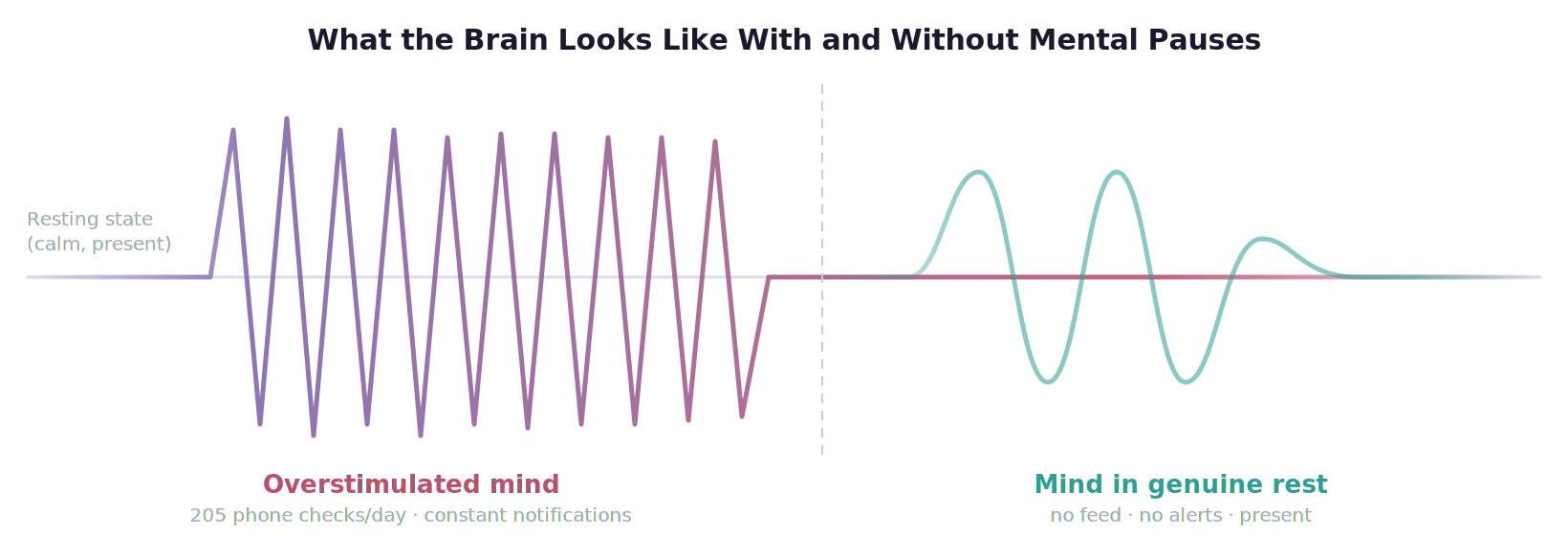
Modern life has quietly removed those pauses. We have replaced them with notifications, feeds, passive scrolling, and the kind of digital noise that feels restful on the surface but keeps the nervous system in a state of continuous low-level activation. That activation, sustained without relief, is precisely what produces anxiety, burnout, and the kind of diffuse sadness that doesn't always have a name.
Research tells us clearly: employees who take regular breaks, rather than powering through – show measurably higher productivity and significantly improved capacity to manage stress. The mind does not perform better under continuous pressure. It deteriorates. Rest is not a reward for output. It is a prerequisite for it.
The WHO's data reveals that nearly half of all mental health conditions begin before age 18. Young adults aged 20–29 are showing the largest increases in prevalence over the past decade. We are not facing a crisis that emerges in midlife – it is forming in people before they have even entered the workforce.
Why We Started Building Anydream
This data – is part of the reason Anydream exists.
We were not looking to build another entertainment platform. We were looking at a world in which a billion people are struggling with their mental state, 85% of workers are burning out, and the average human can no longer sustain 47 seconds of uninterrupted focus, and we asked a simple question: what does genuine mental rest actually look like in a digital world?
Not the absence of screens. Not a productivity hack. Not guided breathing exercises delivered through an app that also sends you push notifications at 8am. Something different. Something that works with the nervous system rather than against it.
The answer we arrived at is immersive, slow, coherent digital environments – cinematic worlds designed not for stimulation, but for presence. Worlds without content feeds. Without notifications. Without the dopamine architecture that keeps 205 phone checks happening every day. Just space. Sound. Atmosphere. The conditions under which the human mind can actually, genuinely pause.
Because the data is clear: we cannot think, create, love, or connect from a state of chronic overstimulation. The pause is not a luxury. It is the condition for everything else.