
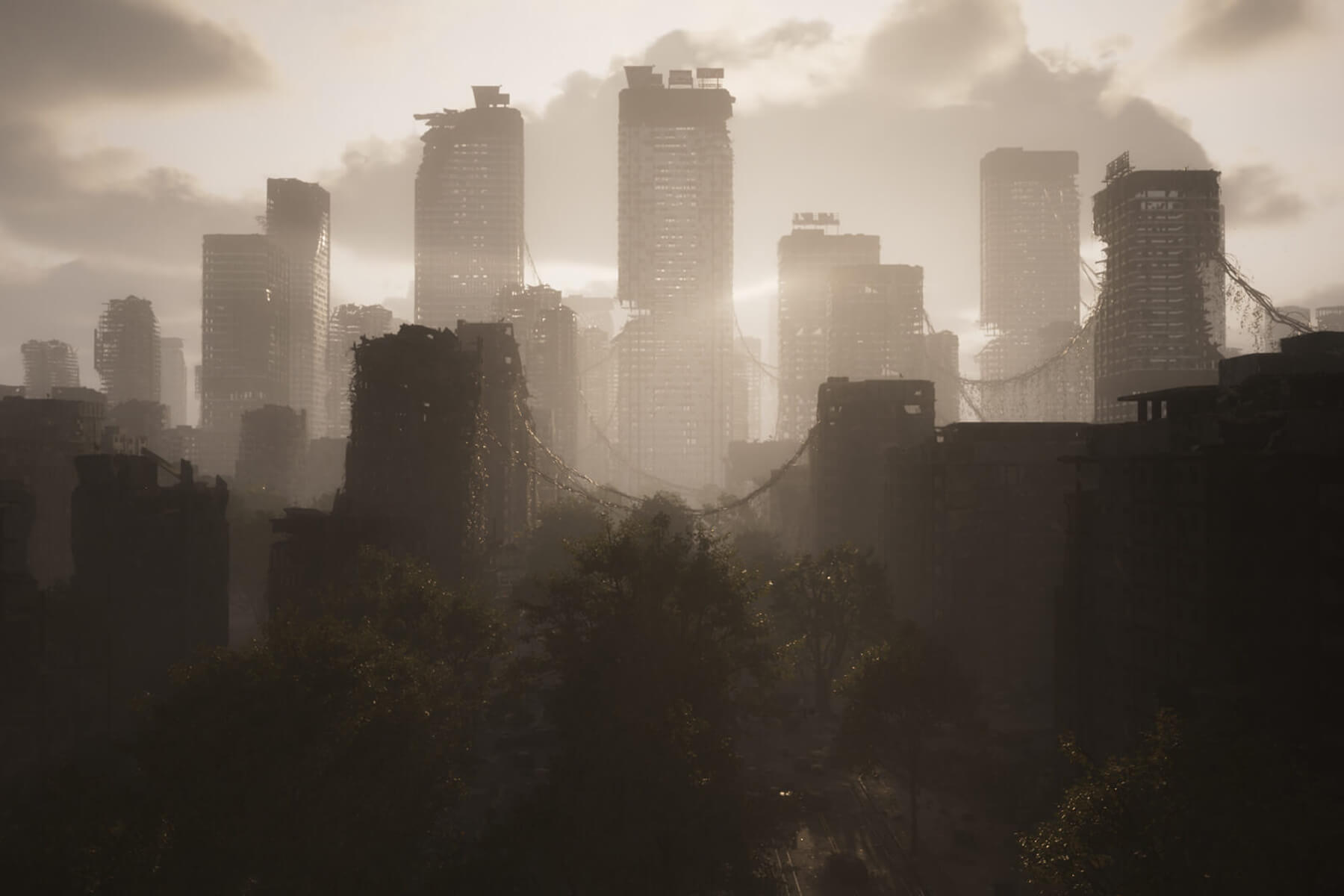
What Sitting Inside Silent World Actually Feels Like
This is the strangest thing to explain about Silent World: a story about total isolation, with no other characters in it, no rescue, no reunion – and listeners consistently describe finishing it feeling less alone, not more. That's not a marketing line. It's a genuinely counterintuitive effect, and it's worth taking seriously rather than just naming it.
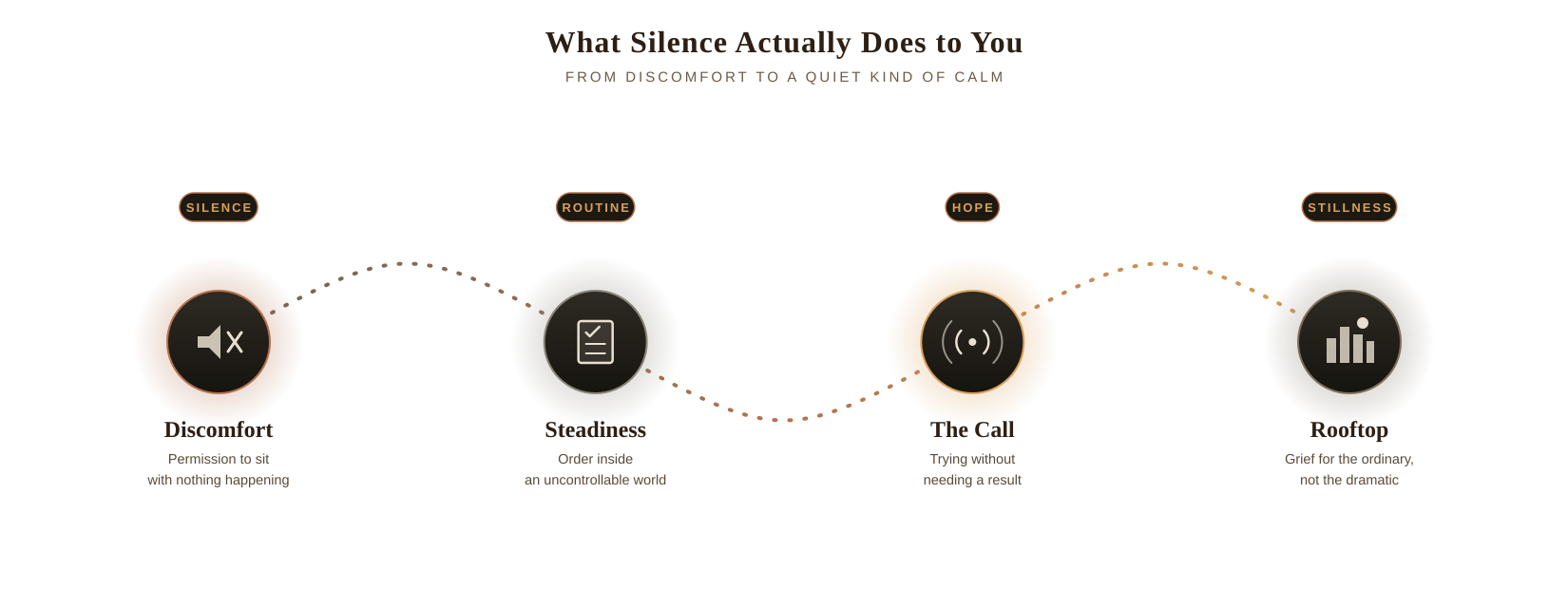
The First Minutes: Permission to Sit With Nothing Happening
Most audio experiences, even relaxing ones, give you something to track – a story beat, a rising melody, a countdown. Silent World opens with almost nothing: waking, listening, the ordinary sound of a generator. For a listener used to constant stimulation, this can initially feel uncomfortable, almost like waiting for something to go wrong. That discomfort is doing real work. It's the sound of a nervous system recalibrating to a pace it doesn't get to practice very often – one where nothing is demanding a reaction from you.
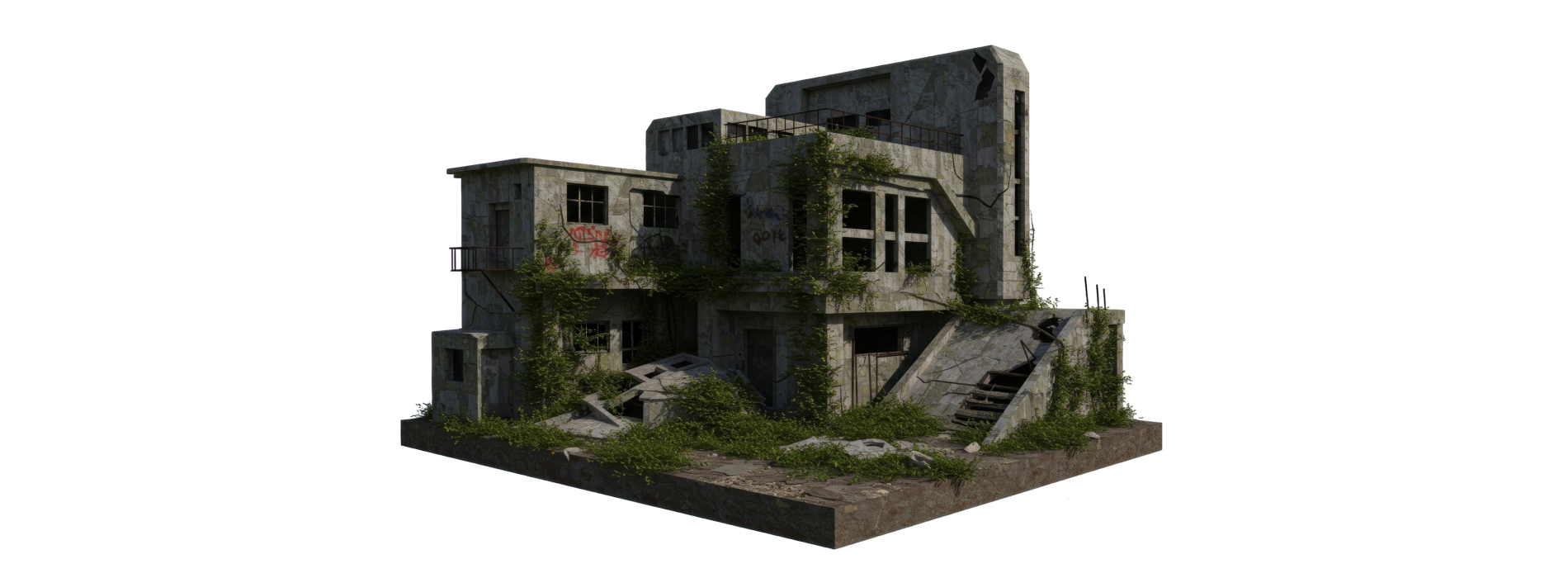
The Fence Line: Watching Someone Choose Order Over Chaos
The daily inspection scenes – checking wire tension, camera feeds, one fixed point after another – tend to be the part listeners bring up first afterward, and rarely for the reason you'd expect. It's not suspenseful. It's steadying. Watching a character impose small, controllable order onto an uncontrollable situation mirrors something genuinely useful: the discipline of routine as a way of holding a mind together, independent of whether the outside world cooperates. Listeners often describe recognizing this feeling from their own lives – the version of it that has nothing to do with the apocalypse at all, and everything to do with a hard week made survivable by nothing more than a consistent morning.

The Radio: Rehearsing Hope That Doesn't Depend on a Result
This is the scene people remember most, and the one that seems to land hardest emotionally, even though – or maybe because – nothing happens in it. The protagonist transmits into static that never answers, and does it anyway, again, the next day. Sitting inside that repetition does something unusual: it separates the act of hoping from the reward of hoping. Most of daily life quietly teaches the opposite lesson – that hope is only worth the effort if it pays off. This scene offers a rehearsal of the alternative: that continuing to try can be its own form of meaning, whether or not anyone answers. Listeners don't need to name that explicitly to feel it. Most just describe the scene as "sad, but not in a bad way" – which is about as accurate a description as we've heard.

The Rooftop: Grief for the Ordinary, Not the Dramatic
When the story pauses on the rooftop and the character remembers not a single traumatic event but the small ambient noise of a functioning city – a tram, a nearby conversation, someone's laugh through a wall – something shifts in how listeners describe their own days afterward. It turns out most people, when asked what they'd actually miss, don't reach for anything dramatic either. They reach for background noise: a coworker's voice down the hall, traffic outside a window, someone else's television through the wall at night. This scene gives listeners a rare, safe space to feel gratitude for exactly that kind of unremarkable presence – the kind that's easy to take for granted precisely because it never announces itself.
Why the Ending Doesn't Resolve – On Purpose
Silent World doesn't end with contact, rescue, or another person. It ends with the same routine, continued: light checked, doors sealed, day logged. For some listeners that's initially unsatisfying – we're trained to expect a payoff. But the responses we hear most often afterward aren't disappointment. They're closer to relief. A story that resolves into rescue would be a story about escaping the situation. A story that resolves into continued discipline is a story about being equal to it. For an hour spent with headphones on, alone, at the end of a long day, that second kind of ending tends to land as more honest – and, oddly, more comforting – than a rescue would have.
Why Different Listeners Take Different Things From It
- Listeners drawn to atmosphere and dread mostly describe the world itself – the quality of the silence, the specific loneliness of a rooftop view over an intact-looking city.
- Listeners with a practical streak fixate on the procedural detail – the fence checks, the fuel logs – the same way they'd enjoy watching someone competently maintain a real piece of equipment.
- Listeners looking for something philosophically substantial hold onto the line about the possibility of being deleted by mistake – and, more often, onto the quieter idea that followed it: that the mere act of still asking the question keeps a person from becoming just another fixed part of the scenery.
- Listeners who just need an hour of decompression report the simplest response: their own day got quieter around the edges, and stayed that way for a while after the headphones came off.
What Real Isolation Teaches Us About This Design
We didn't invent the idea that routine holds a mind together in isolation – people who actually live through extended isolation have been saying it for decades. Antarctic researchers, submarine crews, and solo long-distance sailors consistently describe the same discovery: structure isn't a nice-to-have during prolonged isolation, it's closer to load-bearing. A fixed schedule of small tasks – checking equipment, logging conditions, maintaining a personal ritual – is one of the most reliable tools available for keeping a mind from drifting into the kind of unstructured time that isolation makes dangerous. Silent World's protagonist, an engineer by training, essentially rediscovers this from first principles, one generator check at a time.
Modern Echoes of the Same Feeling
You don't need an apocalypse to recognize what this world is built around. A surprising amount of ordinary modern life runs on the exact same emotional mechanics, just at a much smaller scale:
- Remote work isolation. Anyone who's spent a stretch working alone from home knows the specific discipline of inventing your own structure – a first coffee ritual, a walk at a fixed time – purely to keep the day from dissolving into formlessness.
- The lockdown baking wave. Millions of people, independently, spent early pandemic isolation learning to bake bread – not for the bread, but for the ritual: measurable steps, a predictable outcome, a small, controllable act of creation on a day when almost nothing else felt controllable. Silent World's narrator does the same thing, for the same reason, without ever naming it as therapy.
- Journaling and habit tracking. The impulse to log a day – water levels, fuel, a fence check – isn't so different from a habit tracker or a journal entry nobody else will ever read. The record isn't really for anyone. It's proof, to yourself, that the day happened and you were the one steering it.
- Grief for the ordinary. People who've lost a job, a relationship, or a daily community consistently describe missing the background noise most – a coworker's voice, a regular commute – over any single dramatic memory. Silent World's rooftop scene is built on exactly that same, very ordinary shape of loss.
None of this requires the listener to have lived through anything close to an apocalypse. It just requires them to have had one long stretch of days with no one else keeping time for them – which, it turns out, is a much more common experience than the genre's premise would suggest.
Strip away the fence and the empty city, and Silent World is really offering something much smaller and much more useful: an hour of watching someone hold themselves together through nothing but routine, honesty about what they miss, and the stubborn refusal to stop trying – with no guarantee, and no applause, and no one watching. Most days don't ask that much of the people listening. But something in almost everyone recognizes it anyway. That recognition, more than any plot event, is the actual effect this world is built to produce.